
What should you know first?
Your book needs a defined reader, a clear point of view, professional execution, and a plan for reaching people with a reason to care. For coaches, consultants, and service providers, those decisions deserve attention before purchasing a publishing package.
A finished manuscript answers one question: have you written the book? Your business needs answers to several more.
Whom should the book reach? What should readers understand about your expertise? Where does the book belong in your speaking, media, or client-development plans?
These ten rules describe the publishing decisions I recommend evaluating. They help you assess the work and choose relevant professional support.
1. Give the book a purpose before choosing a package.
A publishing package describes services. Your objective explains why you need them.
A consultant preparing for corporate speaking needs a different conversation from an author developing a workbook for existing clients. Both projects need good writing. Their formats, budgets, and promotional priorities deserve separate consideration.
Before comparing packages, establish the role your book should serve. Your publishing team should explain how the proposed scope supports this purpose and which activities require additional support.
2. Choose the reader before collecting the chapters.
Years of experience produce more material than one book needs. Including everything often leaves the reader without a clear reason to choose your title.
A leadership consultant might have material for executives, new managers, and business owners. Those readers bring different questions and levels of experience.
Professional manuscript development should help select the right assignment. Ask how your team will resolve competing audiences and decide what belongs in the book before the manuscript expands.
3. Make your judgment visible.
Your value includes how you assess a situation, what you notice, and why you recommend a particular response. A list of familiar tips does little to reveal those distinctions.
Your book should communicate your reasoning through supported explanations, relevant examples, and honest limits. Use your own experience accurately. Obtain permission for identifiable client material or use clearly labeled hypothetical examples.
If AI tools participate, retain responsibility for the content. KDP distinguishes AI-generated content from AI-assisted work and requires disclosure of AI-generated material when publishing through its platform. Its rules also leave content verification with the publisher or author.
References: KDP Content Guidelines: AI-generated and AI-assisted content
4. Match the professional team to the manuscript.
An idea, a collection of recordings, and a completed draft represent different starting points.
Coaching, ghostwriting, developmental editing, copyediting, and proofreading address different assignments. Choosing among them requires more than comparing service names.
Ask a prospective team to explain the recommended first stage, the deliverable, and your contribution. A good proposal should make the sequence understandable. Paying for final polish while the central argument needs restructuring leaves the main problem unresolved.
5. Compare the complete economics.
A royalty percentage does not tell you the full return from a book. Neither does the starting fee in a publishing proposal.
KDP’s paperback calculation applies the relevant royalty rate to the list price, then subtracts printing costs. Marketing, editorial work, design, and other project expenses still require separate consideration.
Compare the costs, payment arrangements, rights provisions, accounts, and responsibilities within each proposed publishing route. Ask how changes and future editions are handled. Assess the agreement as a whole before choosing based on one attractive figure.
References: KDP Paperback Royalty
6. Choose formats around the reader’s use.
A paperback for event distribution, an ebook for convenient access, and an audiobook for listening each need a reason within the plan.
You do not need to commission every format at once to demonstrate commitment. You need to understand the value and production demands of each proposed edition.
Ask which formats deserve priority for your manuscript and audience. A workbook dependent on written exercises raises different audio questions from a memoir. Format recommendations should follow the material and intended use.
7. Discuss reader access before release day.
A finished book still needs an appropriate route to its intended readers.
Retail availability, copies for speaking events, professional associations, and direct distribution involve different work. Discuss the routes relevant to your objective and ask who handles each part.
Your publishing proposal should distinguish distribution setup from audience development. Ask what the engagement delivers, what remains your responsibility, and which promotional activities need separate planning. Assess the connection between the book’s purpose and its intended distribution.
8. Establish the message before seeking attention.
A media appearance needs a relevant discussion. A speaking opportunity needs a subject suited to the audience. A book announcement alone does not explain either.
Your manuscript should provide ideas worth discussing and a clear connection to the people you serve. Professional positioning and media preparation should clarify those connections before outreach begins.
Ask whether the proposed support includes message development, a media kit, interview preparation, outreach, or only selected assets. These are different assignments. Choose the work addressing your current gap.
9. Make the reader’s next step useful.
Someone finishing your book should understand what further help you offer and whether the next step fits their situation.
A related assessment, workshop conversation, or resource might be appropriate. The connection should serve the reader’s needs and respect their choice to continue.
Ask how the publishing and marketing plan handles this transition. A link belongs in a larger decision about the offer, delivery, and follow-up responsibilities. Make ongoing promotional communication a clear choice for the reader.
10. Plan the book’s role after the launch.
Launch activity gives the release a schedule. Your professional work continues after those dates pass.
Discuss how the book will support relevant conversations over the following months. A speaking inquiry, a prospect discussion, or an association introduction each presents a different use.
Evaluate progress against the purpose established at the beginning. Keep book sales, qualified conversations, confirmed engagements, and project costs distinct. These measures reveal different results and help you decide which support deserves continued investment.
What should your publishing conversation resolve?
You should understand the book’s intended role, its current stage, and the next professional assignment worth commissioning. A proposal should connect the recommended work with those decisions.
At IME Publishing Group, start by discussing your manuscript, intended reader, and publishing objectives. Ask which combination of development, publishing, marketing, or media support fits your project. Confirm the work in a written scope before proceeding.
Questions authors ask.
Do these rules apply to fiction and children’s books?
Some decisions, including editorial quality, format, costs, and reader access, apply across genres. This article focuses on nonfiction connected to a professional practice. Fiction and children’s books need an assessment suited to their own readers and goals.
Do I need a finished manuscript before speaking with IME?
Bring your current stage, whether an idea, outline, partial draft, or completed manuscript. The next assignment should address the material you have and the work still required.
Does publishing guarantee authority or clients?
No. Readers and buyers evaluate the quality of your thinking, its relevance, your evidence, and your professional work. A book gives them material to assess. Commercial outcomes require separate evaluation.
Sources and practical limits
Published by IME Publishing Group LLC. About the publisher · Editorial standards and corrections
The ten rules, proposal comparisons, examples, and project-planning sequence are editorial recommendations. The KDP sources support the identified AI disclosure and paperback royalty statements. These recommendations do not establish IME package inclusions or guaranteed outcomes.
Sources checked November 26, 2026. Requirements change. General planning guidance does not replace your project agreement or professional advice on rights, contracts, or finance. No sales, placement, review, or production result is promised.
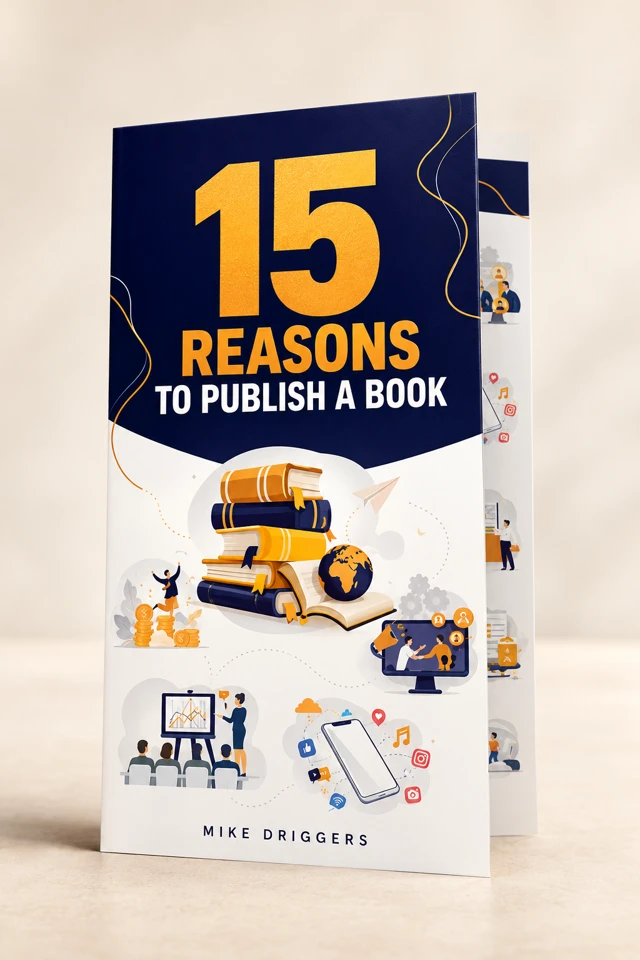
Give your expertise book a defined purpose.
Explore Mike Driggers’ original 15-reasons infographic, then choose the role a book should play in your visibility, relationships, or author-business plan.
View the Free Resource ↓