
What should you know first?
Start with one audience and a useful next step connected to the book. A workshop, interview, companion resource, or consulting conversation should extend the subject. The book supports the relationship, while demand, fit, delivery, and follow-up determine commercial results.
Give the book a defined business role
A book explains your thinking in a form readers choose to spend time with. For a coach or consultant, that creates a place to demonstrate judgment, organize an approach, and help readers evaluate relevance. Publication alone does not establish expertise or produce clients.
Choose the role before adding offers. One book might support an existing workshop. Another might introduce a specialized consulting service. A memoir or novel might serve a different objective entirely. Do not attach a high-ticket offer simply because another author uses one.
Choose a next step serving the reader
A practical invitation follows the reader’s situation. Someone applying a process might benefit from a worksheet. An organizer evaluating a speaker needs program topics and audience fit. A journalist needs an accurate angle and usable background.
Make the next step specific and optional. State what the person receives, what information they submit, and what follows. A free resource should work as described before additional sales activity begins.
- Speaking: a focused session and audience-specific program description
- Media: relevant talking points, supported claims, and an approved biography
- Education: exercises or a workshop extending a useful part of the book
- Consulting: an assessment of fit and a clearly defined scope
Build a simple book-to-conversation sequence
Use an approved excerpt or useful idea to introduce the subject. Offer a relevant resource. Invite permission-based follow-up. Provide a clear route to a conversation only when the reader’s needs match your service.
As a planning example, an author discussing management conversations might offer a meeting-preparation worksheet and a workshop outline. This is an illustrative sequence, not evidence of sales. Price and delivery responsibilities need their own assessment.
Measure outcomes separately
Track book purchases, resource requests, qualified conversations, proposals, and confirmed engagements as separate events. Identify expenses and delivery time before describing the work as profitable. A royalty report alone does not show the full relationship between a book and a service business.
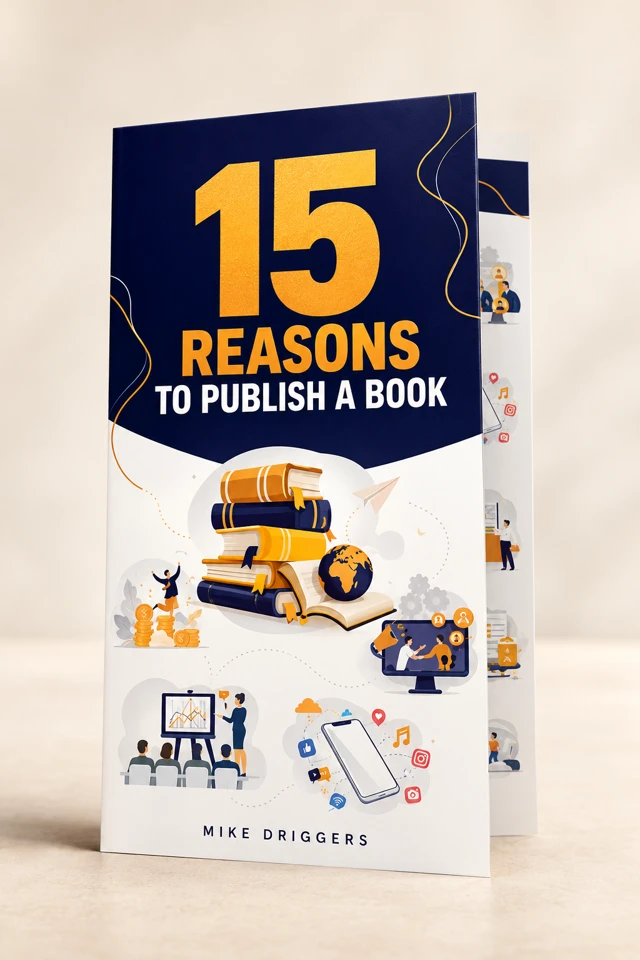
Mike’s 15-reasons infographic introduces ways an authority-positioning book might support visibility, relationships, and relevant offers. Use the giveaway as a conversation starter. Evaluate costs, publishing terms, timelines, and suitability for your own project rather than treating a promotional idea as a promised result.
Keep these decisions in your brief.
A book supports more than one business objective. Choose a small number of relevant opportunities before adding new services.
- Visibility
- Use focused ideas and evidence as the basis for relevant interviews and articles.
- Relationships
- Share the book with partners, clients, organizers, and aligned communities.
- Speaking and education
- Develop a session, workshop, or course around a useful part of the book.
- Services
- Offer a clear next step for readers seeking help applying your approach.
Questions authors ask.
Will publishing a book increase my speaking fee?
A book is one part of the evidence an organizer considers. Audience fit, subject expertise, delivery, materials, reputation, and the buyer’s budget also matter. Publication does not establish a fee or guarantee a booking.
Should every book lead to a coaching program?
No. Choose a next step appropriate to the book and reader. Fiction, children’s books, memoir, and professional nonfiction have different objectives. A reader resource or author update list might fit better than coaching.
What is a reasonable first step beyond royalties?
Choose one audience, one useful extension of the book, and one way to record response. Start with assets and services you are prepared to deliver. Review actual interest and costs before building a larger offer sequence.
Sources and practical limits
Platform references were checked for this edition. Requirements change. General planning guidance does not replace your project agreement or professional advice on rights, contracts, or finance. No sales, placement, review, or production result is promised.
Give your expertise book a defined purpose.
Explore Mike Driggers’ original 15-reasons infographic, then choose the role a book should play in your visibility, relationships, or author-business plan.
View the Free Resource ↓